
Applications of Sheet Metal Roll Forming in Industrial Sectors
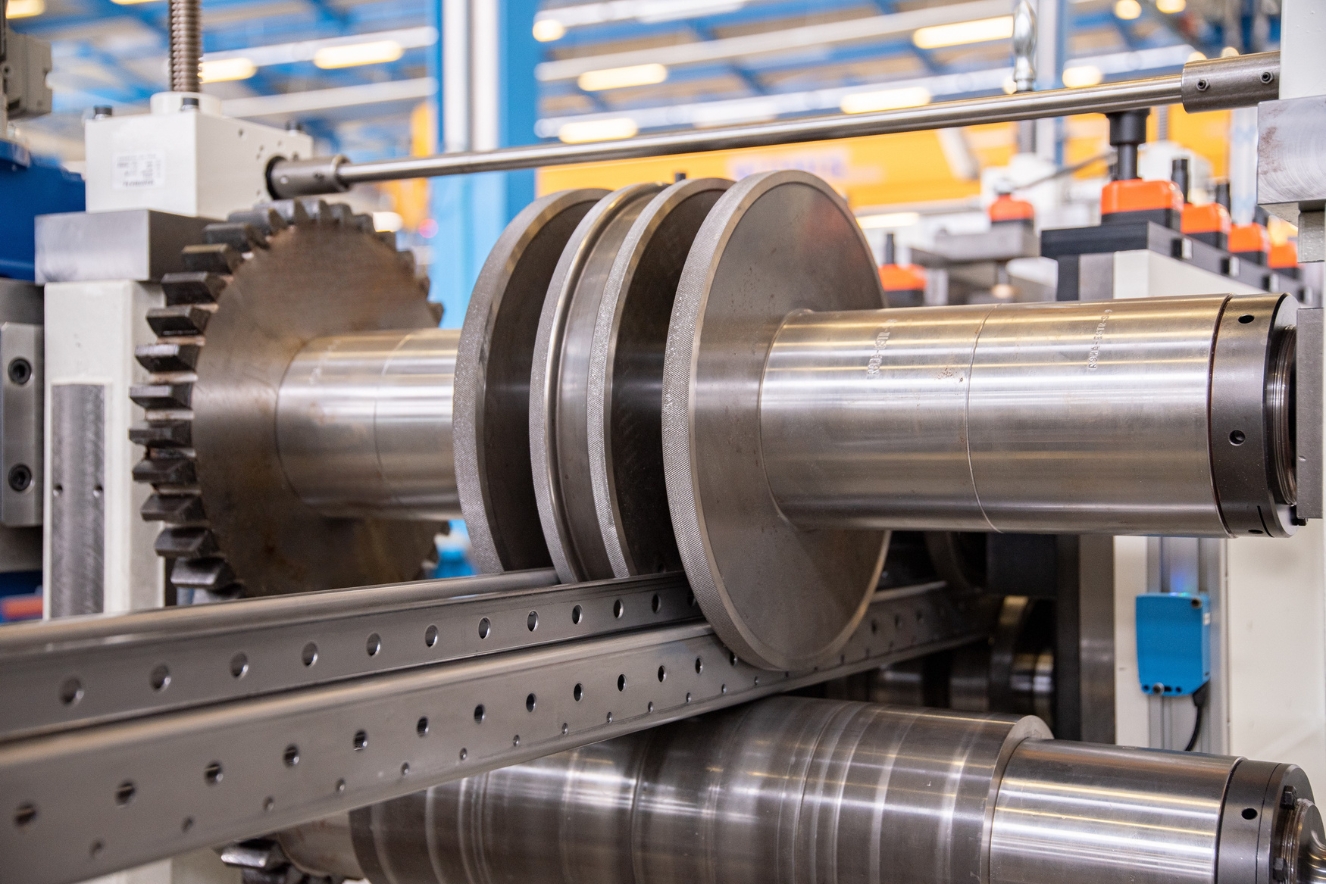
Sheet metal roll forming is one of the most efficient technologies for the continuous production of high-precision metal profiles.
It is used in numerous industrial sectors:
✔ logistics
✔ construction
✔ electrical distribution
✔ photovoltaic
✔ automotive
For metal profile manufacturers, investing in a roll forming line means:
- increasing production capacity
- expanding the product portfolio
- improving competitiveness and margins
- automating processes
Why Roll Forming Is the Key Technology for the Industrial Production of Metal Profiles
Roll forming progressively deforms sheet metal through rolls, generating a continuous profile with constant geometry, enabling multiple production and commercial objectives:
✔ 24/7 continuous production
✔ consistent precision along the entire length
✔ repeatability between production batches
✔ scalable automation
✔ reduced scrap and energy consumption
✔ integrated in-line processing
✔ competitive unit cost at high volumes
👉 Ideal for intensive industrial production and complex profiles.
When to Invest in a New Roll Forming Line
LCompanies manufacturing metal profiles decide to invest in a new roll forming line when they need to respond to specific production and industrial requirements. Some typical situations include:
• Expansion of production capacity
Increase in demand or the need to reduce delivery times.
• Entry into new markets or application segments
New market challenges such as moving from structural construction profiles to components for photovoltaic or logistics systems.
• Production of more complex or high-precision profiles
Advanced geometries, high-strength steels, tight tolerances.
• Automation and plant modernization
Reduction of manual labor, process integration, operational continuity.
• Reduction of unit production costs
Roll forming is particularly advantageous in high-volume production, where the initial investment is rapidly amortized.
👉 Roll forming is particularly profitable in high-volume production.e.
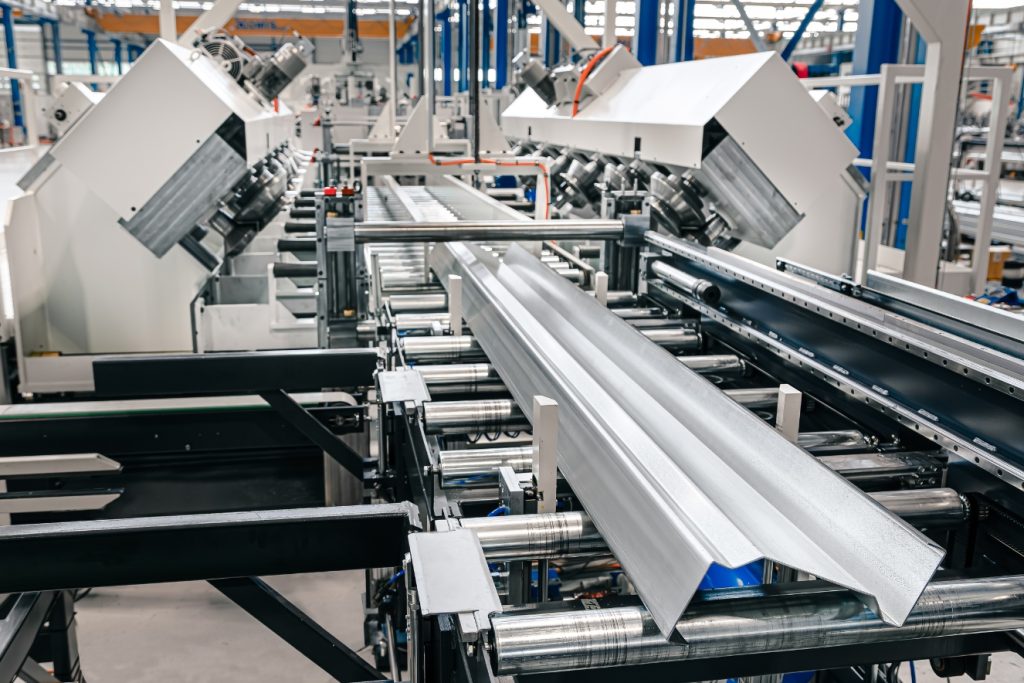
Roll Forming Applications by Industrial Sector
Roll forming enables the continuous production of structural and functional components across many industries.
Roll Forming for Logistics and Industrial Storage
Main products:
• industrial racking systems
• structural uprights
• medium- and heavy-duty storage systems
• supermarket shelving
• silo components
Production requirements:
✔ high dimensional repeatability
✔ consistent structural strength
✔ high speed
✔ integrated punching
Benefici:
✔ continuous production
✔ precise in-line punching
✔ fewer secondary operations
Case study
👉 Highly automated line for supermarket shelving production, with two parallel lines for shelves and reinforcements.
The TWIN technology automatically adjusts profile dimensions, followed by head-to-tail bending and robotic welding to complete the shelving units.
• Productivity up to 9 pieces/minute
• Sheet thickness 0.35–0.7 mm (0.014 – 0.028 in)
• 24/7 continuous production in three shifts with a single operator
Discover how roll forming is used in supermarket shelving production.
Electrical Distribution: Cable Trays, Ladders and Supports
The production of electrical distribution systems requires profiles with high precision and modularity.
Main products:
• cable trays and covers
• cable ladders
• covers and accessories
• structural supports
• electrical cabinet structures
• DIN profiles
Production requirements:
✔ tight tolerances
✔ high surface quality
✔ multiple integrated operations
Benefits:
✔ reduced assembly times
✔ dimensional consistency between production batches
✔ increased system reliability and safety
✔ production efficiency through automated lines
Case study
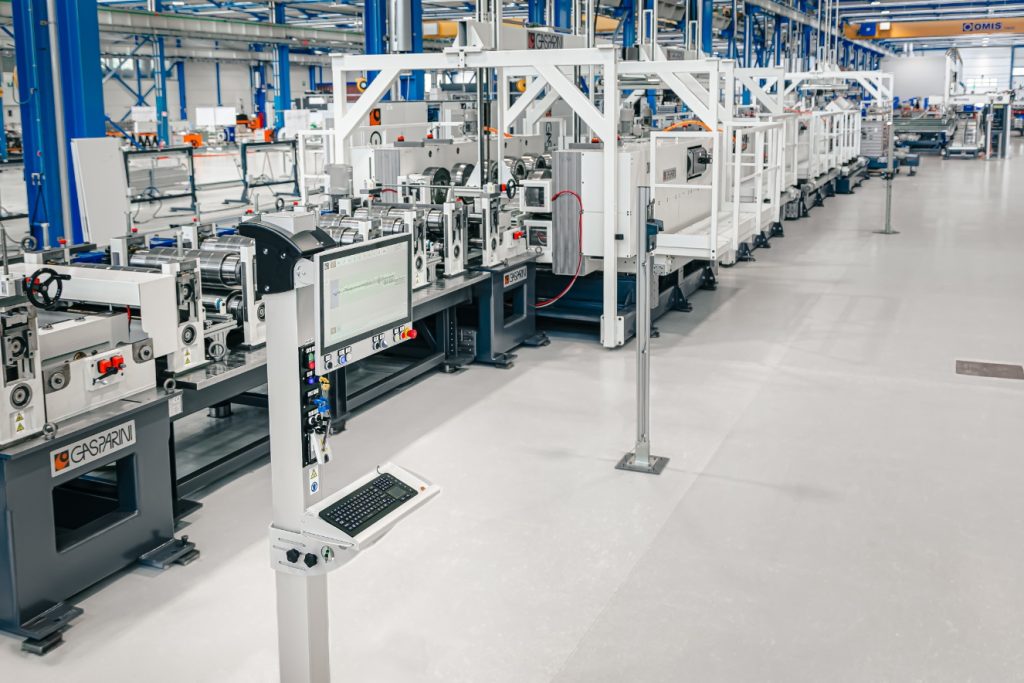
👉 Gasparini has developed a complete and automated roll forming system for the production of cable trays and tray covers.
The plant integrates punching with quick die setup, roll forming with automatic setup for profile dimension changes and coil material change, and an automatic tapering system for perfect joints between cable trays.
The system offers:
• Productivity up to 8 pieces/minute for 3,000 mm lengths (118.1 in / 9.84 ft)
• Sheet thickness from 0.5 to 1.5 mm (0.020 – 0.059 in)
• Processing of five different materials according to customer specifications
Find out more about our roll forming lines for electrical distribution.
Structures for Ground-Mounted Photovoltaic Systems
The global expansion of solar energy has increased the demand for roll-formed metal structures used to support panels.
Main components:
• uprights
• structural beams
• support profiles
Technical requirements:
✔ high mechanical strength
✔ variable lengths
✔ high-strength materials
Benefits of roll forming:
✔ Uniform, high-quality profiles along the entire length
✔ High productivity with the possibility of continuous production
✔ Reduced scrap and optimized material usage
Case study
👉 Impianto flessibile ad alta produttività per profili C, U e Z nel fotovoltaico, progettato per velocità fino a 40 m👉 Flexible high-productivity plant for C, U and Z photovoltaic profiles, designed for speeds up to 40 m/min (131 ft/min), allowing the customer to expand and diversify production.
The line includes:
• TWIN roll forming for sections up to 200 mm (7.87 in) width, 50 mm (1.97 in) height, 3.5 mm (0.138 in) thickness on different steels
• Servo-driven punching with adjustable active dies
• Adjustable cutting unit for optimized performance
Explore roll forming in the photovoltaic industry to learn more about our production lines.
Industrial and Civil Construction
One of the largest sectors for roll forming applications.
Main profiles:
• structural profiles
• roofing and cladding systems
• window and door frames
• scaffolding
• industrial and civil closures
Production requirements:
✔ high volumes
✔ strict dimensional standards
✔ design flexibility
✔ surface quality
Benefits of roll forming:
✔ uniform profiles compliant with standards, ensuring safety and stability
✔ high productivity with the possibility of continuous production
✔ reduced scrap and optimized material usage
✔ flexibility to switch between different geometries and sizes
Case study
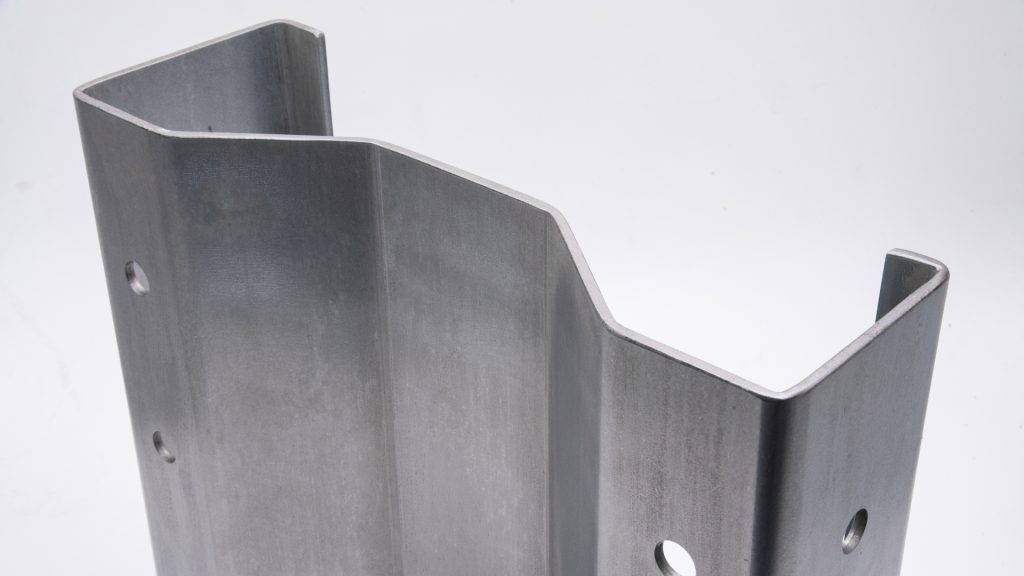
👉 Complete automated plant for the production of composite metal deck profiles, with thicknesses from 0.7 to 1.5 mm (0.028 – 0.059 in), lengths up to 12 m (39.37 ft) and productivity up to 15 pieces/minute, depending on profile length. Traceability and scrap reduction were key requirements.
Gasparini solution:
• REVOLVER roll forming with automatic changeover between four sections
• Embossing and multiple overlap edges
• Flying cut-off and automatic unloading
• Software interface with ERP for smart production and traceability
Discover roll forming solutions for roofing and cladding and learn more about our production lines.
Structural Components for the Automotive Industry
In the automotive sector, roll forming is used for high-strength structural components.
Main profiles:
• frame rails
• anti-intrusion beams
Technical requirements:
✔ extremely tight tolerances
✔ high-strength materials
✔ certifiable consistent quality
Benefits of roll forming:
✔ maximum precision and uniformity for every production batch
✔ high productivity with the possibility of continuous production
✔ reduced scrap and optimized material usage
✔ flexibility to adapt to different component types and materials
Case study
👉 Roll forming line for automotive metal struts, designed to process electro-galvanized high-strength steel with significant springback.
The Gasparini solution integrates:
• PRO roll forming with interchangeable cassette systems
• plotter punching
• deep drawing, notching and post-roll forming cutting
Learn more about our roll forming lines for the automative components.
Roll Forming vs Other Sheet Metal Forming Technologies
When choosing a manufacturing technology, it is important to compare roll forming with other solutions.
Roll forming vs stamping
Better suited for long profiles and continuous production.
Roll forming vs press braking
Ideal for high volumes and repetitive geometries.
When roll forming is the best choice
- customization
- continuous production
- large volumes
- constant cross-sections
Why Choose Customized Roll Forming Lines from Gasparini S.p.A.
Each sector and each product require specific line configurations.
Advantages of tailor-made solutions:
- producing exclusive geometries required by the customer
- optimizing processing sequences
- integrating secondary processes and automation
- adapting to specific materials
👉 Lines designed according to customer specifications allow optimized production performance for each specific product.
Talk to one of our Area Managers, request a demo or visit our headquarters to evaluate the solution best suited to your production.