
World Energy Efficiency Day: Gasparini’s Sustainable Approach
Every year, on March 5th, World Energy Efficiency Day invites companies and industries worldwide to reflect on how energy is produced, managed and used. For manufacturing businesses, this reflection is not only environmental: it is also technological, operational and strategic.
Energy Efficiency in Industrial Production
Today, improving energy efficiency no longer simply means reducing consumption. It means influencing how production systems are designed, how plants operate and how companies plan their long-term development.
For Gasparini S.p.A., sustainability is not a single initiative, but an integrated approach that combines responsible energy management at corporate level with continuous technological innovation in roll forming systems.
Sustainability as a Corporate Infrastructure Strategy
Industrial sustainability begins with how energy is produced, stored and managed in daily operations. Over time, Gasparini has developed a structured path toward greater energy autonomy and reduced environmental impact.
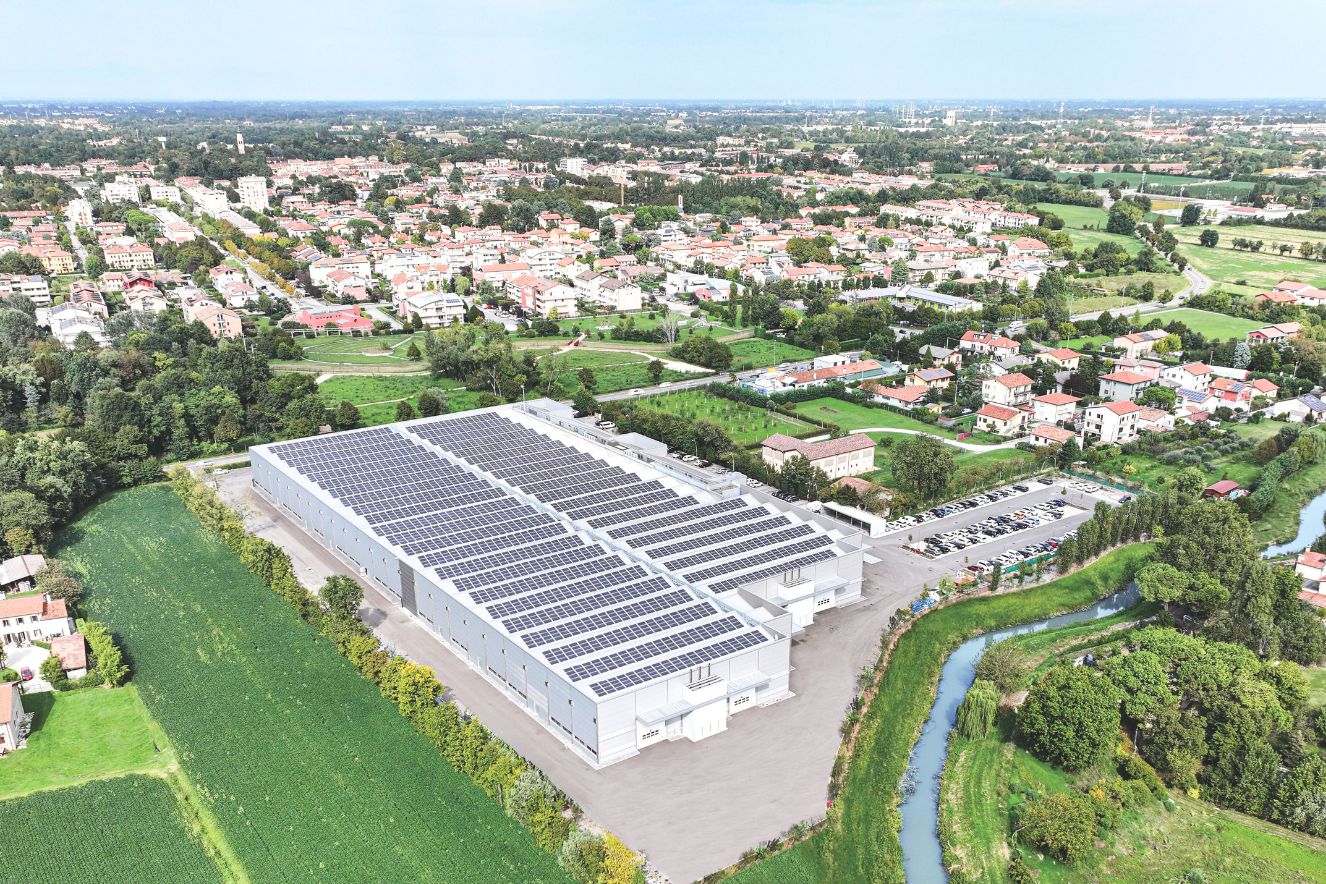
A key milestone in this journey is the installation of a large-scale photovoltaic system covering approximately 10,000 square meters, consisting of 2,241 solar panels with a total installed capacity of 735 kW. This investment significantly strengthens the company’s renewable energy production and enables a high level of energy self-sufficiency – up to eight months per year during peak solar production periods.
To further optimize energy management, the company has installed a Battery Energy Storage System (BESS). With a storage capacity of 1,035 kWh and a power rating of 375 kW, the system maximizes self-consumption of locally generated energy and stabilizes energy availability across different operational activities.
For Gasparini, this infrastructure represents a broader principle: technological innovation must go hand in hand with environmental responsibility.
Energy Efficiency within the Production Environment
Sustainable industrial performance also depends on how energy is used within production spaces. To improve working conditions while minimizing environmental impact, Gasparini has installed more than 20 high-efficiency fans, each with a six-meter diameter, across its production areas.
These systems ensure constant ventilation and adequate thermal comfort for workers, primarily using renewable energy stored in the BESS. The result is a production environment that promotes people’s well-being and responsible energy use, demonstrating that efficiency and quality of work can evolve together.
Designing Roll Forming Technology to Reduce Energy Consumption
In addition to corporate infrastructure, energy efficiency is directly integrated into roll forming lines.
Gasparini systems are designed with compact architectures equipped with regenerative drives, representing a significant advancement over traditional control systems. When motors operate in generator mode, excess energy is not dissipated but recovered and reused.
For all main operations, the metal forming lines use high-performance, high energy-efficiency servo motors, controlled by regenerative systems capable of feeding recovered energy back into the electrical distribution grid.
During braking phases – typically among the most energy-intensive moments of industrial motion – energy is recovered and redistributed to power other motors. When excess energy exceeds immediate demand, it can be fed back into the grid.
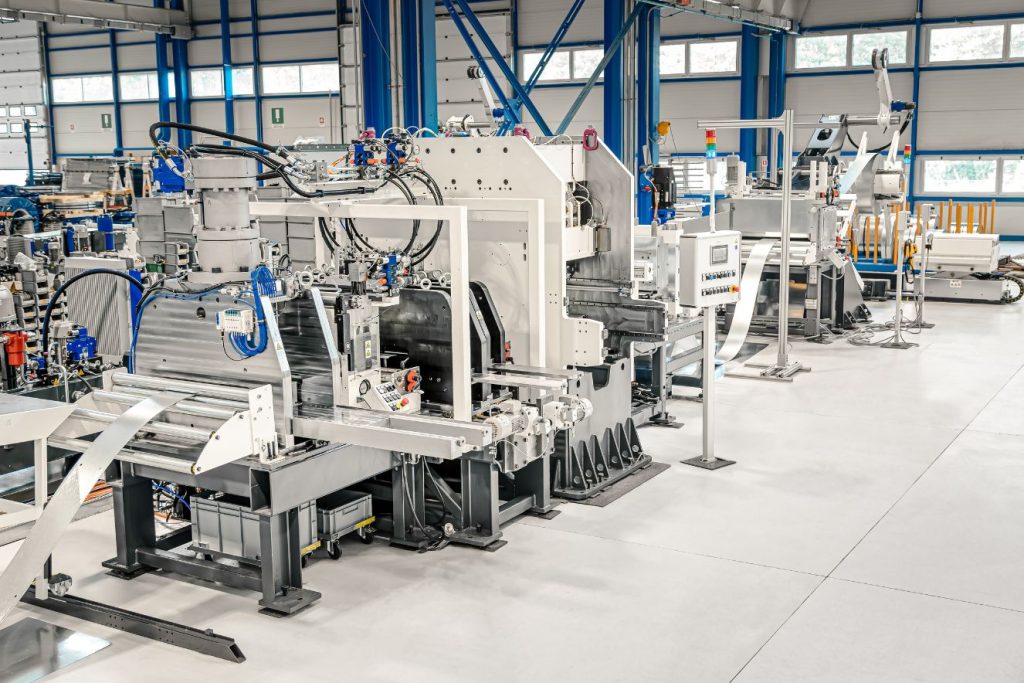
This regenerative approach delivers measurable results. Compared to conventional control systems, current Gasparini lines can achieve energy savings of around 10%, depending on the configuration.
The solution featuring regenerative drives with energy recovery offers the following characteristics:
- generates less heat, therefore eliminating the need for heat dissipation.
- does not require braking resistors, which are potential sources of thermal as well as electrical risk.
- requires less maintenance due to reduced thermal “aging”, resulting in longer service life
- enables more efficient motor torque management, allowing more aggressive decelerations and higher cycle rates
- provides “green” benefits that can be presented in sustainability reporting
Efficiency as a Continuous Engineering Principle
Energy efficiency in industrial production is achieved through the integration of multiple systems working together across the entire production ecosystem.
In practice, this includes:
- On-site renewable energy generation, such as photovoltaic systems that reduce dependence on external supply
- Energy storage systems, which store excess electricity and make it available when demand increases
- Machine-level optimization with regenerative drives and efficient servo motors, braking energy recovery and savings of up to 10%
Being energy efficient does not simply mean reducing consumption, but managing energy in an integrated way: producing it, storing it and recovering it during production, as implemented in Gasparini S.p.A.’s roll forming lines.
On the occasion of World Energy Efficiency Day, this principle reminds the industry that sustainability is a continuous process of improvement. In this context, Gasparini S.p.A. continues its commitment to steady progress through investments in energy production and storage, as well as in high-efficiency manufacturing technologies.